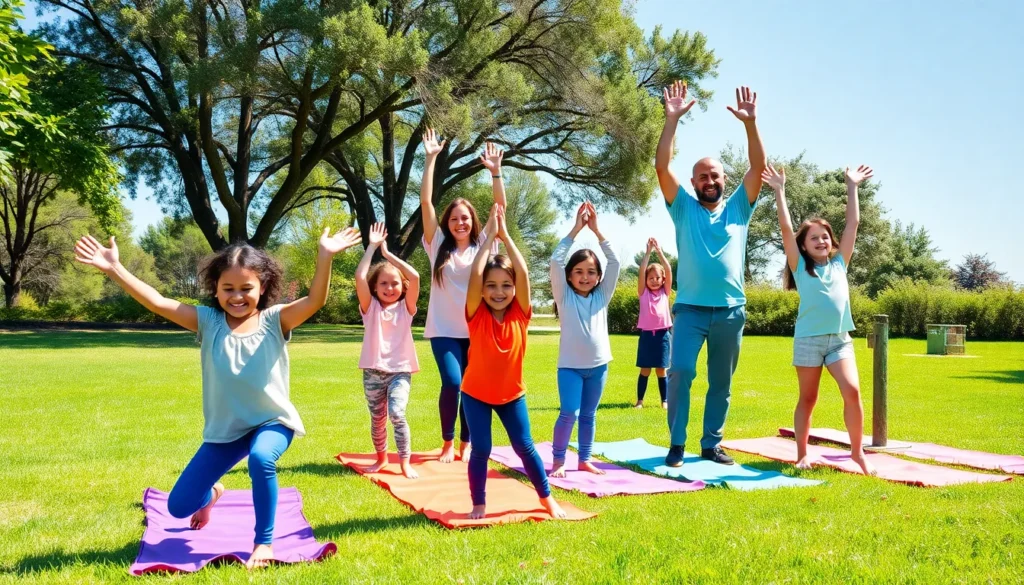
In a world where family time often means navigating the chaos of schedules and screens, family yoga offers a refreshing escape. Picture this: a serene space filled with laughter, awkward poses, and maybe a few wobbly attempts at tree pose. It’s not just about stretching; it’s about bonding, laughing, and maybe even discovering who can hold a downward dog the longest without toppling over.
Family yoga brings everyone together, from the tiniest tots to the wise grandparents. It’s a perfect way to promote mindfulness and flexibility—both in body and in family dynamics. So why not roll out those mats and dive into a practice that’s as beneficial as it is entertaining? Get ready to stretch, breathe, and share some giggles while building a stronger family connection.
What Is Family Yoga?
Family yoga is a practice that unites family members through physical and mental exercises. It combines traditional yoga techniques with playful activities suitable for various age groups. This practice cultivates a space for deeper connections among family members, allowing them to interact meaningfully.
In family yoga sessions, participants engage in poses that encourage teamwork and communication. Children often find enjoyment in the fun and imaginative aspects of yoga, while adults appreciate the stress relief and mindfulness that come with it. Incorporating storytime or themed classes enhances participation, making it appealing for everyone, from toddlers to grandparents.
The practice emphasizes flexibility—both in the body and in interpersonal dynamics. Family members learn to adapt to each other’s movements, fostering a sense of unity. Mindfulness exercises during family yoga create awareness of one’s body and emotions, not only benefitting individual practice but also enhancing family relationships.
Incorporating regular family yoga sessions into a weekly routine helps instill discipline and creates anticipation for shared experiences. This participatory activity motivates families to step away from screens and prioritize health in a nurturing environment. Different classes may also adapt to suit various skill levels, ensuring inclusivity.
Overall, family yoga embodies harmony, relaxation, and joy. These collective experiences cultivate harmony within families, strengthening bonds through shared goals and achievements in a supportive atmosphere.
Benefits of Family Yoga
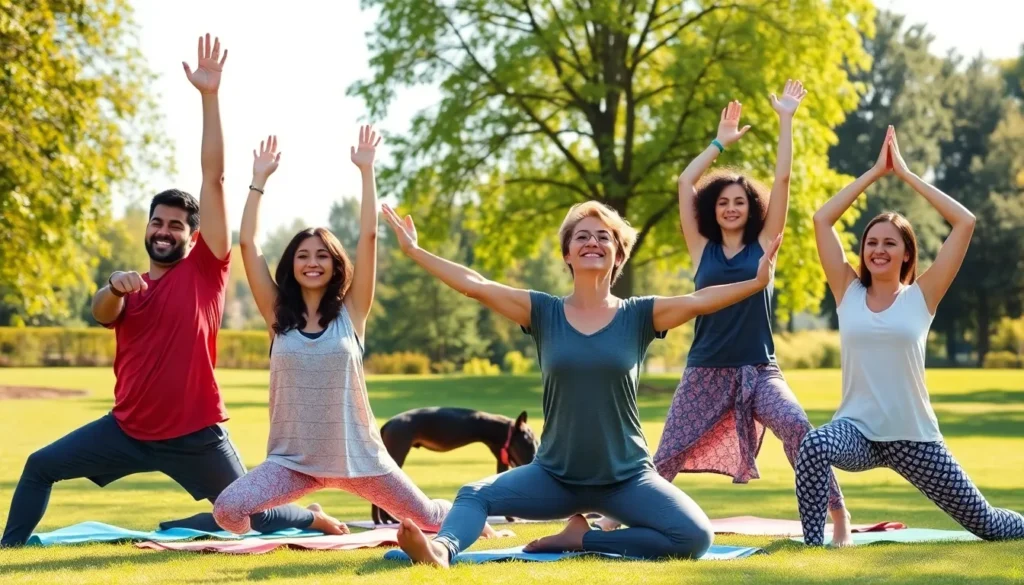
Family yoga offers a multitude of benefits, enhancing both physical health and mental well-being. Engaging in this practice together strengthens family bonds while promoting a healthier lifestyle.
Physical Benefits
Family yoga improves flexibility and strength for all participants. Practicing various poses enhances muscle tone and balance, which supports physical development in children and maintains mobility in adults. Cardio health benefits from the increased blood circulation achieved during yoga sessions. Many families notice improved posture and alignment as they work together in different poses. The shared experience encourages physical activity among family members, helping combat sedentary lifestyles. Engaging in yoga together fosters coordination and resilience, creating a sense of achievement and teamwork.
Mental Benefits
Mental clarity and tranquility flourish through family yoga sessions. Regular practice enhances focus and concentration, which benefits both children and adults in academic and work settings. Mindfulness techniques incorporated during yoga help reduce stress and anxiety. Families find joy in shared laughter and creativity, promoting a positive atmosphere. This practice encourages emotional regulation, allowing family members to navigate challenges together. Enhanced communication skills arise as members express feelings and support one another, cultivating healthy relationships. Overall, this shared experience nurtures emotional growth, creating a peaceful family dynamic.
Types of Family Yoga Practices
Family yoga encompasses various practices that invite members to connect deeply while enjoying movement and mindfulness.
Partner Yoga
Partner yoga cultivates cooperation and trust among family members. Participants engage in poses that require support and balance, promoting teamwork. Couples can enjoy a unique experience, while siblings build stronger bonds through shared movements. Involving children encourages them to interact with adults in a supportive setting. This practice emphasizes communication, as members express their needs and comfort levels during transitions. Overall, partner yoga enhances relationships and reinforces emotional connections through synchronized poses.
Group Flow Classes
Group flow classes immerse families in a dynamic environment that emphasizes unity. Each family member contributes to a collective rhythm while practicing poses together. These classes often include variations to accommodate different skill levels, allowing everyone to feel included. Fun themes and guided instructions keep participants engaged, making it enjoyable for all ages. This group activity promotes laughter and creativity, breaking down barriers between generations. Ultimately, group flow classes strengthen family bonds, encouraging shared experiences that instill joy and mindfulness.
How to Get Started with Family Yoga
Starting family yoga involves making choices that best fit the family’s needs. Engaging everyone in the process boosts excitement and commitment.
Choosing the Right Class
Selecting an appropriate class ensures a positive experience for every member. Look for classes designed for all ages, incorporating fun elements like storytelling or themes. Many studios offer family-specific sessions, so checking local listings helps find suitable options. Instructors experienced in teaching diverse age groups facilitate understanding and enjoyment. Parents should consider class size as smaller groups often provide more personalized attention. Additionally, reading reviews and asking for recommendations can help identify classes that align with family goals.
Creating a Home Practice
Establishing a home practice offers flexibility and convenience for families. Designate a specific space to practice, ensuring it’s comfortable and distraction-free. Gather props like mats, blankets, and blocks to enhance the experience. Scheduling regular sessions, even if just 15-30 minutes, fosters commitment. Incorporating family favorites, such as themed yoga days or specific poses, maintains interest. Using online resources, like videos or mobile apps, provides guidance for practicing together at home. Lastly, encouraging each member to contribute ideas for the session promotes inclusivity and collaboration.
Family yoga serves as a powerful tool for enhancing connections and promoting well-being among family members. By engaging in this practice, families can escape the hustle and bustle of everyday life while fostering mindfulness and flexibility. The shared experience of yoga not only strengthens bonds but also cultivates emotional growth and communication.
As families explore different yoga styles and incorporate playful elements, they’ll discover the joy of working together towards a common goal. This journey encourages a commitment to health and wellness in a nurturing environment. With regular practice, families can create lasting memories and a peaceful dynamic that benefits everyone involved. Embracing family yoga is an investment in both physical health and emotional harmony, paving the way for a more connected and joyful family life.